
Contact With us
8/28, Robert Alwis Mw,
Boralesgamuwa. 10290.
Sri Lanka
info@pes-consultancy.com
+94 777 342173
Call For Inquiry
+94 777 342173
More Services
Aircraft Engineering Part-66 Entry Procedure
The Part-66 aircraft engineering licensing process requires candidates to complete basic knowledge examinations, gain approved practical maintenance experience, and submit an application to the national aviation authority. Requirements and timelines vary depending on the license category pursued, such as Category A, B1, or B2.
Complete Basic Knowledge Requirements
Candidates must complete the required Part-66 basic knowledge modules either through an approved Part-147 training organization or via the self-study route. Approved training offers structured classroom instruction, while self-study allows flexibility but requires strong discipline. Successful completion of all applicable modules is mandatory before progressing to practical experience.
Gain Practical Maintenance Experience
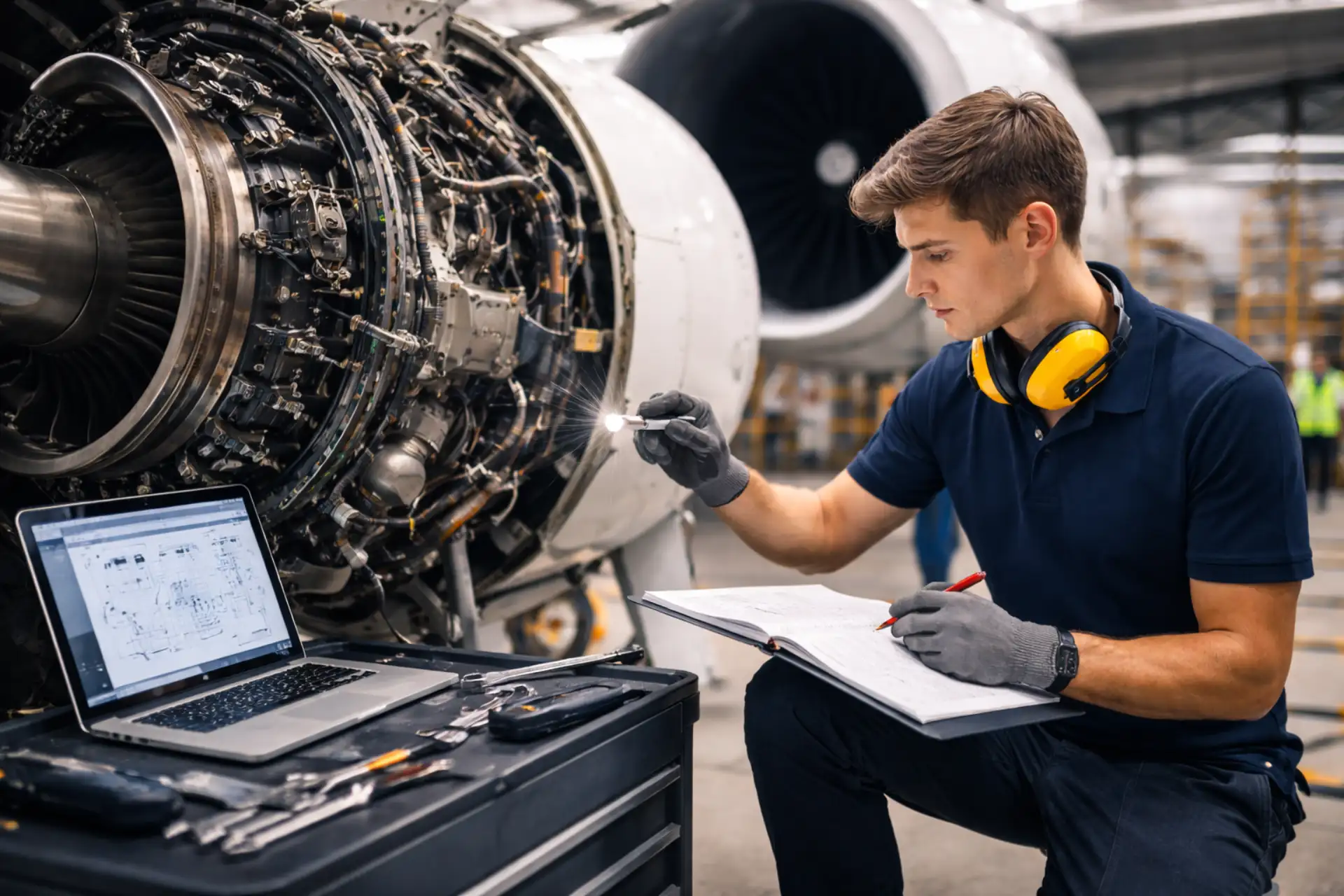
Applicants must gain hands-on maintenance experience relevant to their chosen license category. This experience must be recorded in a detailed logbook and typically ranges from two to five years under EASA guidelines. Categories include B1.1 for mechanical turbine aircraft, B2 for avionics, and Category A for line maintenance roles, often supported by On-the-Job Training.
Demonstrate Language and Medical Fitness
Candidates must demonstrate adequate English language proficiency to understand technical documentation, safety procedures, and regulatory communication. In addition, applicants must meet medical fitness requirements appropriate to aircraft maintenance duties, ensuring they can perform tasks safely, accurately, and in compliance with aviation safety standards.
Submit Your Application to the Authority
Once knowledge and experience requirements are met, candidates must submit a formal application to their national aviation authority. Required documents typically include identity proof, Part-147 training certificates, completed experience logbooks, recommendation forms, and application fees. The authority will assess eligibility before issuing the Part-66 license.
Add Aircraft Type Ratings (Optional)
After obtaining a basic Part-66 license, engineers may add aircraft type ratings to enhance employability. Type training involves both theoretical and practical components approved by regulatory authorities. Upon successful completion, an application is submitted to update the license, authorizing maintenance work on specific aircraft types.
Service Outcome
- Clear understanding of Part-66 licensing requirements and entry procedures
- Structured planning of examinations, practical experience, and application timelines
- Reduced risk of delays through accurate documentation and regulatory compliance
- Confident progression toward a compliant and employable aircraft engineering career
1. Do you provide Part-66 training or conduct examinations?
No. We do not provide training or conduct examinations. We guide candidates through approved training routes and regulatory requirements.
2. Which Part-66 license categories do you provide guidance for?
We provide guidance for Category A, B1 (including B1.1 mechanical turbine), and B2 (avionics) licensing pathways.
3. Can I follow a self-study route for Part-66 modules?
Yes. We explain both approved Part-147 training and self-study routes, helping you choose the most suitable option based on your background and goals.
4. How long does it take to complete the Part-66 licensing process?
The duration varies depending on license category, training route, and practical experience requirements, typically ranging from two to five years.
5. Do you assist with license application and documentation?
Yes. We guide candidates in preparing applications, compiling required documents, and submitting them correctly to the competent aviation authority.